

Quality Control Processes in Composite Materials
May 2, 2026
Expert Content
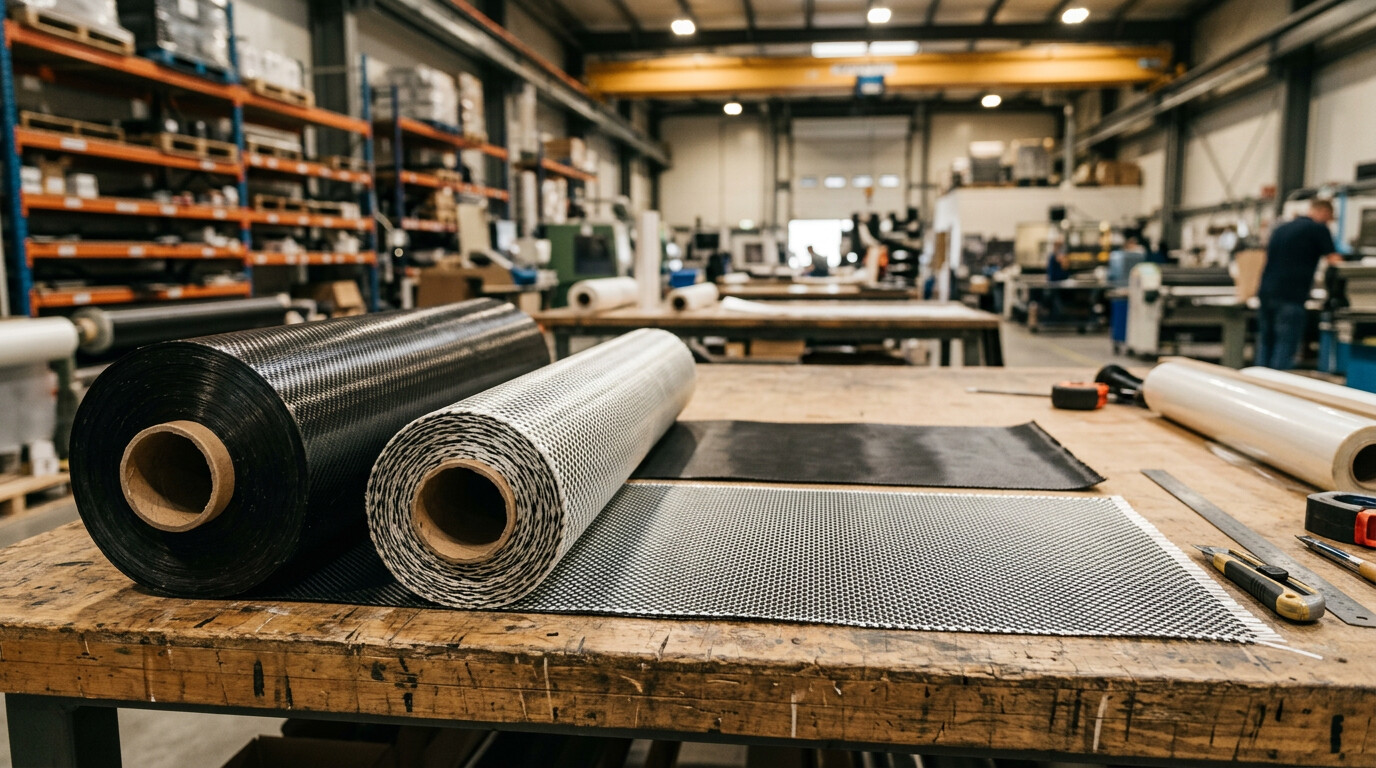
Quality control in composite manufacturing is often thought of as merely final-product inspection; in reality, true quality is a holistic discipline that spans from raw-material intake to mold preparation, from process parameters to final inspection and documentation. Because strength in composites is largely formed during production, the goal is not to detect a defect afterwards but to prevent it from occurring.
In this article we cover the main stages of composite quality control, the testing methods used, and how to guarantee repeatability in series production.
Main Control Stages
An effective quality-control chain covers every stage of the part lifecycle:
- Raw material and reinforcement control: The properties and shelf life of resin, hardener and fiber are verified.
- Mold and process preparation: Mold surface, release agent and ambient conditions are checked.
- Production and layup: Number of layers, orientation and resin ratio are monitored.
- Dimensional measurement and tolerance: The part is compared against the drawing dimensions.
- Visual and surface inspection: Cracks, voids, delamination and surface defects are sought.
- Mechanical testing and validation: Strength tests are performed on samples when required.
Testing Methods
Both destructive and non-destructive testing methods are used for composites. Non-destructive testing (NDT) allows internal defects to be detected without damaging the part:
| Method | Purpose | Type |
|---|---|---|
| Visual inspection | Surface defects | Non-destructive |
| Ultrasonic testing | Internal voids, delamination | Non-destructive |
| Tensile/flexural test | Mechanical strength | Destructive |
| Burn-off test | Fiber/resin ratio | Destructive |
Standards and Documentation
Quality control gains meaning through international standards and traceable documentation. Quality management systems such as ISO 9001 guarantee the repeatability of the process, while records kept for each batch make root-cause analysis possible in case of an issue. Traceability is the foundation of customer trust, especially in B2B and series-production projects.
Why Process Repeatability is Critical
Producing a single good part and producing thousands of parts at the same quality are different things. In composites, small deviations in process parameters (temperature, cure time, resin ratio) directly affect part performance. Therefore, fixing and continuously monitoring parameters during the transition to series production is one of the most critical topics.
Common Defects
The most common defects in composite manufacturing are resin-rich or resin-starved areas, air voids, delamination, incomplete cure and surface cracks. Most of these defects stem from deviations in process parameters or gaps in raw-material control. A defect detected at an early stage can be corrected at low cost, whereas a defect in a part already in the field is both costly and a reputational risk. For this reason, placing control points correctly along the production line is of great importance.
The Business Value of Quality Control
A well-designed quality-control process does not merely catch errors; it also reduces scrap rates, decreases customer returns and makes delivery times predictable. In B2B projects, consistent quality is the foundation of a long-term business relationship. Traceable records and compliance with standards put the customer's trust in the supplier on a concrete footing. In short, quality control is not a cost item but an investment that creates a competitive advantage.
The Role of Digital Tools
Modern quality control does not rely solely on the human eye and manual measurement. Digital calipers, 3D scanners and data-collection systems ensure that measurements are recorded consistently and tracked on a batch basis. When the collected data is analyzed with statistical process control, a deviation can be noticed before it turns into a defect. This predictive approach significantly reduces the scrap rate, especially in high-volume production, and makes quality sustainable. As a result, digital quality control turns a reactive inspection task into a proactive engineering discipline that protects both the product and the customer relationship.
MOE Kompozit designs its quality-control approach according to the part's intended use and performance expectations, and runs the process with documentation from sample validation to series production.
Request a Technical Quote for Your Composite Project
Let us align material choice, production route, quantity and lead time, then prepare a project-specific quote for your carbon fiber, FRP or fiberglass application.
Get Quote